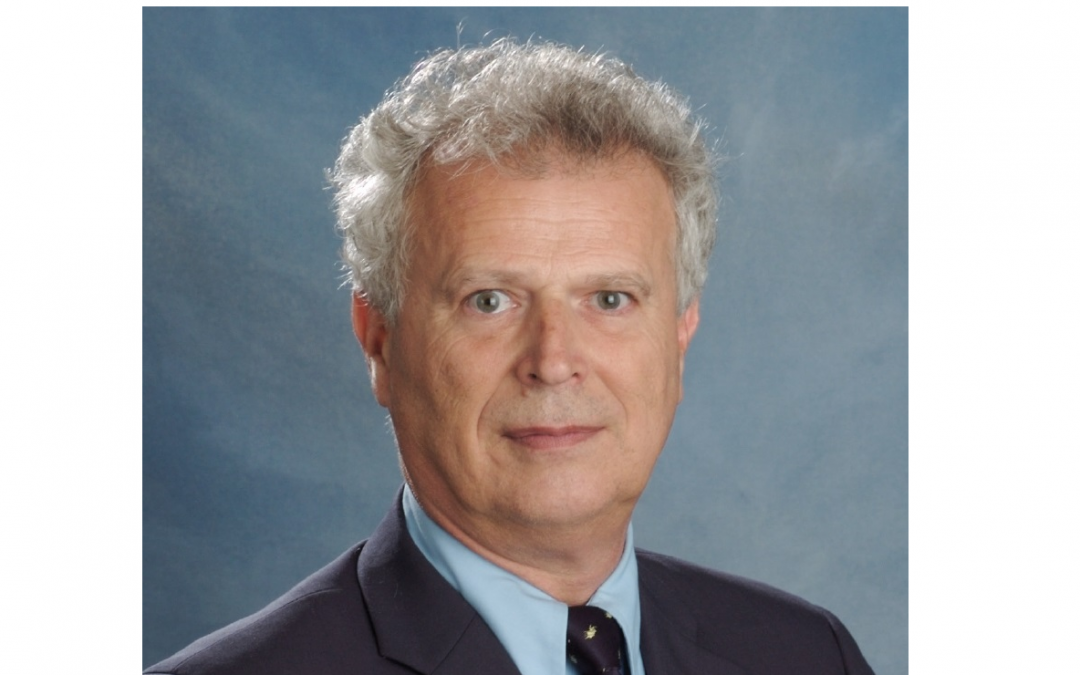
B.Sc. (Universidad del Zulia – Venezuela), M.A.Sc., Ph.D. (University of Oklahoma), Professor, Department of Chemical Engineering and Applied Chemistry, University of Toronto
Areas of expertise
Interfacial curvature of surface active compounds
Low surface tension films
Lecithin-based microemulsions as drug delivery vehicles
Surfactant-oil-water systems maybe used as templates to produce nanostructured materials, as delivery vehicles for drugs and food additives, and as solvents in: degreasing, cleaning, bio-separations, polymerization, environmental remediation, and enhanced oil recovery. Formulation of surfactant solutions for these and other applications requires significant experimental work and expertise. From the engineering point of view, most surfactant-based processes are “black boxes” because of the complex thermodynamics of these systems. Current equations of state are just starting to tackle simple systems but are not yet capable of reproducing the phase behavior of complex surfactant-water-oil systems. Recently, a “net-average curvature” model has been proposed to predict the interfacial curvature and physical properties of these complex surfactant-oil-water systems. This project seeks to further develop the net-average curvature model into an “expert system” capable of predicting the properties of surfactant formulations (e.g. solubilization capacity, interfacial tension, droplet size, and viscosity) as a function of surfactant/oil type and composition, electrolyte concentration, temperature, and pressure.
Low Surface Tension Films
This project will focus on studying the properties and potential applications of low surface tension films consisting of mixtures of negatively-charged (anionic) and positively-charged (cationic) surfactants. This research seeks to gain a fundamental understanding in the thermodynamics of anionic-cationic surfactant films at air/water and air/solid interfaces, and to evaluate the performance of mixed anionic-cationic films in two target areas: hydrophobic coatings, and dewatering agents. Success in these areas could lead to an alternate environmentally safe waterproofing technology and reduction in energy costs in waste treatments facilities.
Lecithin-Based Microemulsions as Drug Delivery Vehicles
Modern drug delivery vehicles strive to supply drugs on the specific tissues where they are needed, and at a specific rate. Some of the challenges in drug delivery include: the low water solubility of certain drugs, the presence of hydrophilic/hydrophobic zones in living tissues, the metabolism and adsorption of drug and vehicle in other tissues, toxicity associated with the drug and delivery vehicle, the rate of release and others. Drug delivery systems include the use of polymer solutions, surfactant solutions, vesicles, emulsions and microemulsion systems. Microemulsions, in particular, have demonstrated to be excellent vehicles for fast and efficient delivery, but they have the limitation that, in most cases, formulations may contain alcohols and other toxic additives. This work seeks to produce alcohol-free formulations containing phospholipids and sugar-derived bio-compatible surfactants. Drug delivery efficiency and cytotoxicity of these micoemulsions will be evaluated using a transdermal delivery test.
Lung Surfactants
Lung surfactants consist of a complex mixture of phospholipids, glycolipids (mostly saturated), and proteins. These surfactants have the ability of reducing the surface tension of aqueous solutions to values less than 1 mN/m under compression. This property of lung surfactants facilitates respiration and prevents alveoli collapse. Insufficient production or surface activity of lung surfactants produce a condition known as respiratory distress syndrome (RDS). RDS is a common problem among premature babies. Surfactant replacement therapy is the method of choice to treat this condition. Commercial surfactant replacement formulations are expensive and in some cases become inactive by a number of physiological conditions that affect the composition of lung surfactant films. In collaboration with Professor A. W. Neumann (Department of Mechanical and Industrial Engineering), we will be evaluating the use of biocompatible polymers in lung surfactant replacement formulations to improve the surface activity, film stability and oxygen and carbon dioxide transport through lung surfactant films.
B.A.Sc., M.A.Sc.(University of Toronto), Ph.D. ( Waterloo ), P.Eng. Professor, Department of Chemical Engineering and Applied Chemistry, University of Toronto
Areas of Expertise
Bioprocess engineering for production of chemicals, fuels and materials
Biological waste treatment of wastewater and air emissions
Environmental aspects of pulp and paper
Expert witness & scientific research reviews
Current Projects
Photobioreactors for photosynthetic organisms
Microalgae for food, fuels and biochemicals
Wastewater and biosolids treatment in pulp and paper
Bioprocess Engineering, Biological Water Treatment, Biofiltration, Environmental Engineering, Pulp and Paper and Environment, Transport in bioreactors, Algae, and Biofilms.
Consulting Activity
Technical advice on the treatment of wastewaters and air emissions, pulp and paper environmental issues and processes involving biological systems (cells, biosludges, algae, enzymes, etc.). Also provide analysis and advice in areas of technical expertise in support of insurance claims and litigation. Provide advice to government on research tax credit claims and alternative dispute resolution.
About
Grant Allen is a Professor in the Department of Chemical Engineering and Applied Chemistry at the University of Toronto and Frank Dottori Chair in Pulp and Paper Engineering. He obtained his B.A.Sc. (1981) and M.A.Sc.(1983) degrees Chemical Engineering at the University of Toronto, specializing in bioprocesses and biomedical engineering. Grant also worked with Esso Petroleum Canada before enrolling in a Ph.D. program in chemical engineering (specializing in biochemical engineering) at the U of Waterloo. His research is in bioprocess engineering, with application to treating wastes and utilizing them for energy and chemical production. He has over 150 publications and has supervised 34 doctoral students, 46 masters and 21 postdoctoral fellows. He has co-led ten industrial research consortia working on environmental and energy challenges in the pulp and paper industry with multidisciplinary teams of up to 15 faculty and their students that engage up to 25 partners from Canada and around the world. He spent a research leave in 1994 with Weyerhaeuser Co. in Tacoma WA, working on biofiltration of air emissions and a research leave at a crown research organization in New Zealand (SCION), working with their green processing team on biorefineries. He has held several leadership positions in academia and the community, including Vice-Dean (Undergraduate) for the Faculty (2007-2011), Department Chair from (2011-2021), Director of the Pulp & Paper Centre (2001-03, 2022-23), President of the Canadian Society of Chemical Engineering (2008/09) and Chair of the Chemical Institute of Canada (2019/2020). He is a Fellow of the Canadian Academy of Engineering, the American Association for the Advancement of Science, the Engineering Institute of Canada and the Chemical Institute of Canada and was recently awarded his Faculty’s Sustained Excellence in Teaching Award.
Grant’s research interests are in the field of bioprocess engineering with emphasis on the biological treatment of waste waters, bioflocculation, microalgae production, biofiltration of air emissions, biofilms, microbiology of waste treatment and bioreactor design. His interests apply to many industrial wastes although most of his work is in the Pulp and Paper industry. Professor Allen provides technical advice on processes involving biological materials (e.g. cells, enzymes, etc.) and waste treatment (water and air) and environmental processes. He has provided advice and conducted research contracts in his areas of expertise for various manufacturing operations, engineering firms, insurance and legal firms and the Federal Government of Canada. He has extensive experience advising on scientific research tax credit claims for the Canadian government and has also received training in alternative dispute resolution.
B.A.Sc. and M.A.Sc. (Sharif University of Technology), Ph.D. (Toronto), P.Eng, Post-doc (MIT)Professor, Department of Chemical Engineering and Applied Chemistry, University of Toronto Canada Research Chair in Urban Mining Innovation co-Director, Ontario Centre for the Characterization of Advanced Materials (OCCAM)
Areas of Expertise
Critical, Rare earth elements, and Battery materials
Hydrometallurgy
Extractive metallurgy
Process simulation
Thermodynamic modeling
Technoeconomic analysis
System level and financial modeling
Energy storage and batteries
Current Projects
Separation of rare earth elements using electrodialysis
Extraction of rare earths from ionic clays
Recycling of lithium ion batteries
Development of lithium ion and aluminum ion batteries
Urban mining and advanced recycling of Waste Electrical and Electronic Equipment
Supercritical fluid extraction
Carbon management through the development of a “green electrochemical technology” for iron extraction and steel refining
Industrial solid waste reduction through waste valorization to produce strategic materials like rare earth elements, lithium and cobalt
Development of innovative materials with unique properties (hydrophobicity, anti-scaling) with far-reaching applications in structural and energy materials sectors
Energy storage focusing on the development of a new generation (post lithium) of rechargeable batteries
B.Sc. (Oklahoma), M.Sc. (Oklahoma), Ph.D. (UC Berkeley) Associate Professor, Department of Chemical Engineering and Applied Chemistry, University of Toronto
Areas of expertise
Applications of multidisciplinary research strategy (kinetic and isotopic techniques, spectroscopy, and theoretical modeling) to advance fundamental, molecular scale understanding of heterogeneous catalytic processes. Understand heterogeneous catalytic science, deciphering the structures and dynamics of catalyst surfaces and connecting these surface events at the atomic scale to their macroscopic catalytic behavior for fuel processing, chemical synthesis, and emission control technologies.
Current Projects
Industrial catalytic technology developing: understanding the effects of microenvironment in sustainable chemical and fuel synthesis
Bridging thermo- and electro-catalysis in the synthesis of sustainable liquid fuel
Connect the structure and reactivity of transition metal catalysts in c-h, c-o, c-c bond activation
Many of the challenges across the fields of environment, health, medicine, and energy can be addressed through advances in catalytic technology. The goal of my research is to advance catalytic technology by providing a deep understanding of its science at the molecular level. A second goal of this effort is to apply this new knowledge to the design of materials with novel kinetic functions that enable desirable chemical reactions to occur selectively and efficiently.
My research group synthesizes catalytic materials with purpose-built structures and compositions and applies combined methods of kinetics, spectroscopy, microkinetic modeling, and isotopic analysis to probe their dynamics and kinetic consequences in chemical reactions under conditions relevant to industrial practice. These fundamental studies are carried out in parallel with designing and fabricating “chemical-plants-on-a-chip” as compact and light-weight micro-reactor systems for small scale fuel and chemical processing.
Aside from the full range materials synthesis, kinetic evaluation, and spectroscopy capabilities in our laboratory, our group carries out in-situ X-ray absorption studies and perform theoretical calculations at the various national scientific user centers in Canada and the United States. We also collaborate extensively with experts in the complimentary disciplines of surface science and theoretical modeling.
Ph.D. (Queen’s), P.Eng. Associate Professor, Teaching Stream Department of Chemical Engineering and Applied Chemistry, University of Toronto Cross-appointed to Institute for Studies in Transdisciplinary Engineering Education and Practice (ISETP)
Areas of Expertise
Chemical process scale-up and simulation
Process safety analysis
Life-cycle analysis
Data analytics research
VR/AR immersive technology development for education and training
Current Projects
Technical advice on chemical product and process design, including performing process simulation for equipment sizing, engineering drawing, cost estimation, process safety analysis, and life-cycle analysis.
Technical advice on chemical product and process design, including performing process simulation for equipment sizing, engineering drawing, cost estimation, process safety analysis, and life-cycle analysis.
About
Professor Chan obtained her Bachelor’s and PhD degrees in Chemical Engineering from Queens University, Canada. During her graduate studies, she worked with Genencor Inc/Dupont Bioscience in the US and later continued her Postdoctoral Fellowship at Agriculture Canada in biomaterials and bioplastics development. Prof. Chan began her academic career at the University of Waterloo in 2012. In 2017, she joined the Department of Chemical Engineering and Applied Chemistry at the University of Toronto as the Assistant Professor, Teaching Stream. She is also a practicing professional engineer registered in Ontario, Canada. Her teaching and research focus on chemical process design and scale-up simulation and modernizing chemical engineering laboratory curriculum. In addition, she uses virtual/augmented technology and data analytics techniques to facilitate individualized learning.
B.S. (University of Pennsylvania), M.S., Ph.D. (California Institute of Technology)
Associate Professor, Department of Chemical Engineering and Applied Chemistry, University of Toronto
Sources of particulate matter in urban atmospheres
Particulate matter is an important urban air pollutant. Our group conducts field measurements of organic compounds in urban areas to identify their sources and chemical properties. The chemical information allows us to study the physical and biological properties of particulate matter emitted from vehicular traffic, food cooking and wood burning.
Mechanisms of atmospheric reactions
We study reaction mechanisms through controlled laboratory experiments, using different chemical reactors to simulate atmospheric oxidation. We investigate topics including mechanisms of mixing between organic compounds, and reactions between organic compounds and sulfur dioxide to form sulfuric acid in the atmosphere.
Persistence of wildfire-derived pollutants
Our group studies whether major wildfires, such as the 2016 Fort McMurray wildfires, would leave behind toxic pollutants in burnt areas that can affect long term human health. We measure heavy metals and organic carcinogens in indoor house dust in fire-affected areas to determine the contribution from wildfires. Our work informs remediation efforts after environmental disasters.
Health impacts of organic aerosol
Using chemical information, we study the health impacts of particulate matter. We collaborate with the Faculty of Medicine to study the sub-chronic effects of pollutants on pulmonary health. We study the mechanisms by which particulate matter exposure leads to exacerbation of lung diseases (such as cystic fibrosis) and respiratory infections.
Will Cluett joined the Department of Chemical Engineering and Applied Chemistry at the University of Toronto in 1986 after receiving his B.Sc. and Ph.D. degrees in chemical engineering from Queen’s University and the University of Alberta, respectively. From 1997-2003 he served as Chair, First Year in the Faculty of Applied Science and Engineering and from 1998-2003 he also served as the Faculty’s Vice-Dean. In 1997, he was awarded the Syncrude Canada Innovation Award from the Canadian Society for Chemical Engineering given annually to a resident of Canada who has made a distinguished contribution in chemical engineering before the age of 40. In 1998, he was elected a Fellow of the Chemical Institute of Canada. Professor Cluett’s research and consulting activities are in the fields of process identification, control and design. He has supervised or co-supervised 4 doctoral students and 26 masters students and, from their work, has published more than 50 papers in refereed journals such as Automatica and the Journal of Process Control. Professor Cluett is also the co-author of a book with Liuping Wang entitled “From Plant Data to Process Control: Ideas for Process Identification and PID Design” that was published in 2000 by Taylor and Francis in their Systems and Control Series.
Director of Pulp & Paper Centre, NSERC Industrial Research Chair in the Role of Inorganics in the Industrial Processing of Woody Biomass, Associate Professor, Dept. of Chemical Engineering and Applied Chemistry, University of Toronto
Ph.D., P.Eng., C.Eng, C.F.S., OC, O.Ont, F.C.I.C, F.C.A.E., F.C.I.F.S.T., F.A.O.C.S., F.I.A.Fo.S.T., F.E.C., F.R.S.C. Professor Emeritus, Department of Chemical Engineering and Applied Chemistry, University of Toronto
Areas of Expertise
Food process engineering
Membrane processes
Oilseed processing
Food fortification
Current Projects
Salt fortification with minerals and vitamins
Tea fortification
Proteins and peptides for diabetes prevention
Fortification of Bouillon cubes, local soft drinks
Food process engineering, separation processes, nutraceuticals, micronutrient fortification
Consulting Activity
Technical advice on food processing, production of food proteins, edible oils and oil products, nutraceuticals, essential oils and spices. Laboratory planning. Support of insurance claims and litigation.
About
Levente L. Diosady is an Honour Graduate (1966) in Chemical Engineering from the University of Toronto . He is a registered Professional Engineer, and a designated Consulting Engineer in the Province of Ontario. After graduation he returned to the University of Toronto , where he obtained his M.A.Sc. (68) and Ph.D. (71) degrees in the Department of Chemical Engineering and Applied Chemistry. In 1972 Dr. Diosady joined the Cambrian Engineering Group as a process engineer, and in 1974 he was appointed Director, Research and Development for the Company. In this capacity he was responsible for establishing the company’s research and contract analytical laboratories. He initiated an ambitious program of process development in the areas of edible oil processing and environmental control. Under his direction the laboratory group had grown to 35 scientists and technicians by 1979, and performed some 10,000 contract analyses monthly in the food, feed and environmental control fields. In addition to his research and development duties he participated in several engineering projects. In 1974 he reviewed the environmental treatment systems of the mining and ore processing complex of Ecstall Mining in Timmins, and initiated a major water and air management program at the site. He was responsible for the design of a major pilot-plant for Environment Canada, and the process design for the POS Pilot Plant Corporation facilities in Saskatoon. He supervised the design and construction of several industrial waste water treatment systems.
In October 1979 Dr. Diosady was invited to the University of Toronto, Department of Chemical Engineering and Applied Chemistry as Associate Professor, where he joined Dr. L.J.Rubin in establishing the first Canadian engineering program in food process engineering. Together they developed four undergraduate and three graduate courses, and initiated a multi-faceted research and development program. Dr. Diosady was promoted to Professor in 1985. In 1990 he has been appointed Adjunct Professor in the University of Guelph, School of Engineering.
Professor Diosady’s research interests include vegetable oil processing, edible-oil refining and catalytic hydrogenation, extrusion, protein extraction by membrane processes, advanced separation processes, micronutrient fortification of food and meat curing. He is the author of over 200 publications in refereed journals, and presented the results of the group’s research at some 250 international scientific meetings in Canada and abroad. His research has also resulted in 30 patents.
For the past 20 years he has been active in developing techniques for fortifying salt with iron, zinc, B vitamins and iodine for the prevention of micronutrient deficiency diseases, which adversely affect some 2 billion people. Tests in India with 3.4million school children demonstrated that replacement of household salt with double-fortified salt in school lunches resulted in a 34% decrease in anemia in children after eight months. The technology has been demonstrated with 26 million consumers in Uttar Pradesh state in India, resulting in a 20% improvement in iron status. As of 2023 80 million consumers receive double fortified salt in three Indian states. Multiple fortified salt has been tested in India, Ethiopia and Tanzania, demonstrating a dramatic improvement in folic acid status.
He has been an active member of several scientific societies, He is a fellow of the Chemical Institute of Canada, the Canadian Institute of Food Science and Technology, the American Oil Chemists’ Society, the Canadian Society of Chemical Engineering, Engineers Canada, the Canadian Academy of Engineering and the Royal Society of Canada. His work has been honoured by a number major awards, including the Queen’s Jubilee Award, the gold medal of Engineers Canada and the University of Toronto Alumni Network, the Nicolas Appert Lifetime Achievement Award and the Officers’ Cross of the Order of Merit of Hungary. He is a member of the order of Ontario, and an Officer of the Order of Canada.
In addition to his academic activities, Dr. Diosady continues to consult in the areas of food processing, trace organic analysis, laboratory planning, and R & D management. He is the President of Food BioTek Corporation and a Director of Chemical Engineering Research Consultants Limited. He represented the academic sector on the Board of Directors of SGS-ICS, a firm specializing in certification of manufacturing operations to the ISO 9000 series of standards. Dr. Diosady is active in the cultural activities of the Hungarian-Canadian community: he is a founding director and Secretary Treasurer of the Hungarian Research Institute of Canada, a research ancillary of the University of Toronto; a founding director and executive director of the Rákóczi Foundation, Vice President of a non-profit housing corporation and past president of the Hungarian-Canadian Engineers’ Association.