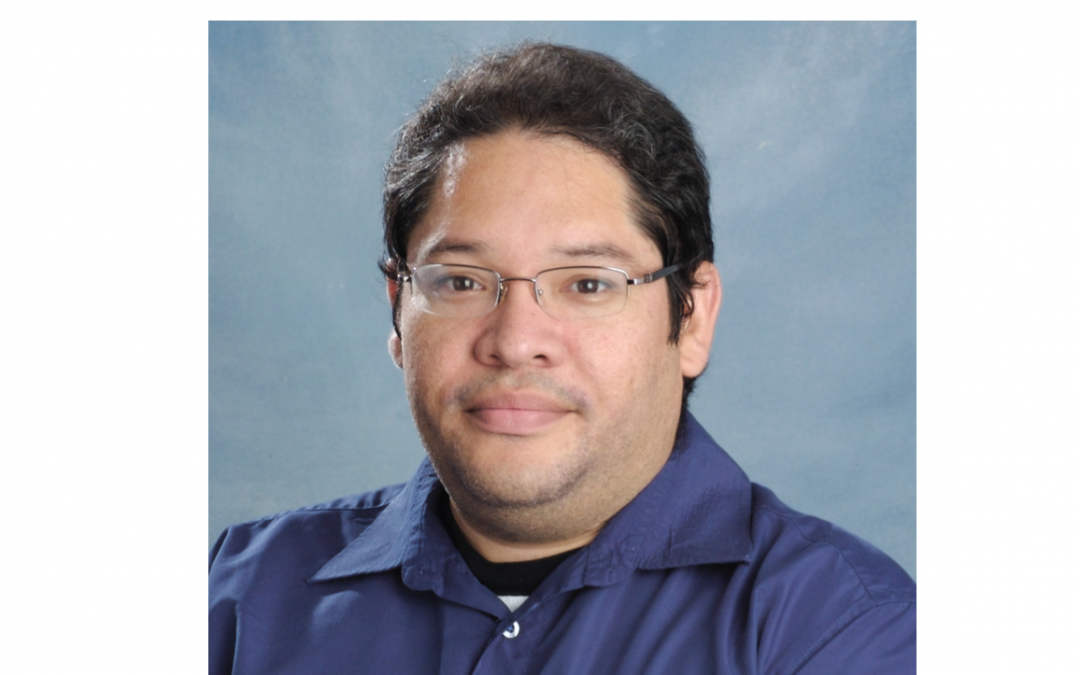
Edgar Acosta
B.Sc. (Universidad del Zulia – Venezuela), M.A.Sc., Ph.D. (University of Oklahoma),
Professor, Department of Chemical Engineering and Applied Chemistry, University of Toronto
Areas of expertise
- Interfacial curvature of surface active compounds
- Low surface tension films
- Lecithin-based microemulsions as drug delivery vehicles
- Lung surfactants
Contact
- Phone: (416) 978-0742
- Email: edgar.acosta@utoronto.ca
Research Areas
Interfacial Curvature of Surface Active Compounds
Surfactant-oil-water systems maybe used as templates to produce nanostructured materials, as delivery vehicles for drugs and food additives, and as solvents in: degreasing, cleaning, bio-separations, polymerization, environmental remediation, and enhanced oil recovery. Formulation of surfactant solutions for these and other applications requires significant experimental work and expertise. From the engineering point of view, most surfactant-based processes are “black boxes” because of the complex thermodynamics of these systems. Current equations of state are just starting to tackle simple systems but are not yet capable of reproducing the phase behavior of complex surfactant-water-oil systems. Recently, a “net-average curvature” model has been proposed to predict the interfacial curvature and physical properties of these complex surfactant-oil-water systems. This project seeks to further develop the net-average curvature model into an “expert system” capable of predicting the properties of surfactant formulations (e.g. solubilization capacity, interfacial tension, droplet size, and viscosity) as a function of surfactant/oil type and composition, electrolyte concentration, temperature, and pressure.
Low Surface Tension Films
This project will focus on studying the properties and potential applications of low surface tension films consisting of mixtures of negatively-charged (anionic) and positively-charged (cationic) surfactants. This research seeks to gain a fundamental understanding in the thermodynamics of anionic-cationic surfactant films at air/water and air/solid interfaces, and to evaluate the performance of mixed anionic-cationic films in two target areas: hydrophobic coatings, and dewatering agents. Success in these areas could lead to an alternate environmentally safe waterproofing technology and reduction in energy costs in waste treatments facilities.
Lecithin-Based Microemulsions as Drug Delivery Vehicles
Modern drug delivery vehicles strive to supply drugs on the specific tissues where they are needed, and at a specific rate. Some of the challenges in drug delivery include: the low water solubility of certain drugs, the presence of hydrophilic/hydrophobic zones in living tissues, the metabolism and adsorption of drug and vehicle in other tissues, toxicity associated with the drug and delivery vehicle, the rate of release and others. Drug delivery systems include the use of polymer solutions, surfactant solutions, vesicles, emulsions and microemulsion systems. Microemulsions, in particular, have demonstrated to be excellent vehicles for fast and efficient delivery, but they have the limitation that, in most cases, formulations may contain alcohols and other toxic additives. This work seeks to produce alcohol-free formulations containing phospholipids and sugar-derived bio-compatible surfactants. Drug delivery efficiency and cytotoxicity of these micoemulsions will be evaluated using a transdermal delivery test.
Lung Surfactants
Lung surfactants consist of a complex mixture of phospholipids, glycolipids (mostly saturated), and proteins. These surfactants have the ability of reducing the surface tension of aqueous solutions to values less than 1 mN/m under compression. This property of lung surfactants facilitates respiration and prevents alveoli collapse. Insufficient production or surface activity of lung surfactants produce a condition known as respiratory distress syndrome (RDS). RDS is a common problem among premature babies. Surfactant replacement therapy is the method of choice to treat this condition. Commercial surfactant replacement formulations are expensive and in some cases become inactive by a number of physiological conditions that affect the composition of lung surfactant films. In collaboration with Professor A. W. Neumann (Department of Mechanical and Industrial Engineering), we will be evaluating the use of biocompatible polymers in lung surfactant replacement formulations to improve the surface activity, film stability and oxygen and carbon dioxide transport through lung surfactant films.
Complete CV available upon request.