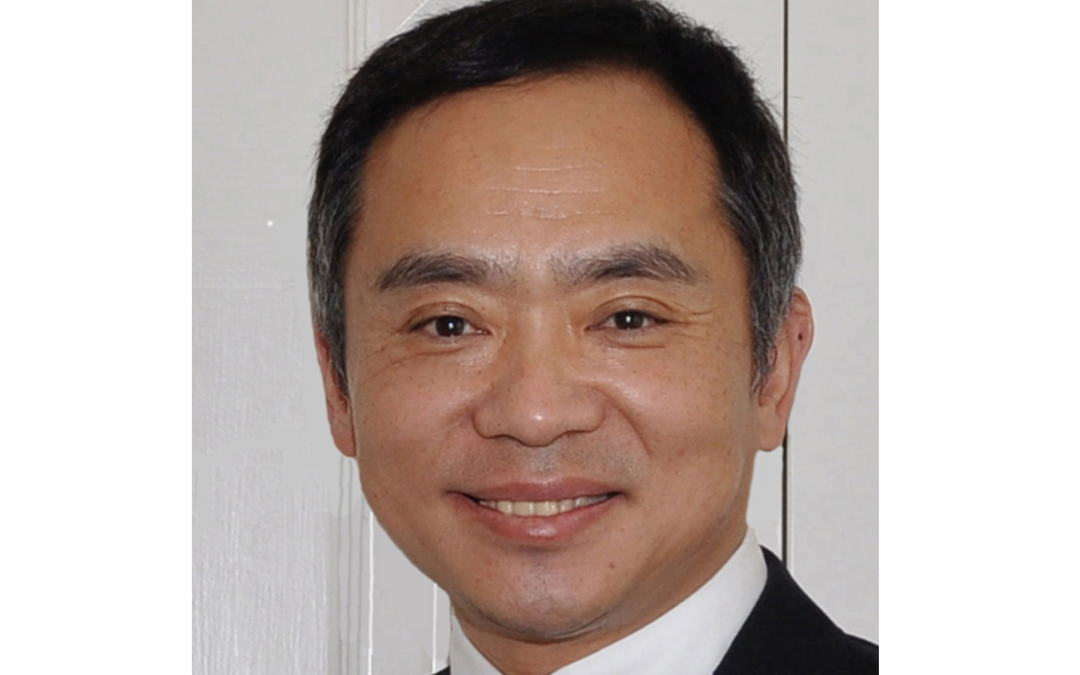
B.A.Sc., M.A.Sc.(University of Toronto), Ph.D. ( Waterloo ), P.Eng. Professor, Department of Chemical Engineering and Applied Chemistry, University of Toronto
Areas of Expertise
Bioprocess engineering for production of chemicals, fuels and materials
Biological waste treatment of wastewater and air emissions
Environmental aspects of pulp and paper
Expert witness & scientific research reviews
Current Projects
Photobioreactors for photosynthetic organisms
Microalgae for food, fuels and biochemicals
Wastewater and biosolids treatment in pulp and paper
Bioprocess Engineering, Biological Water Treatment, Biofiltration, Environmental Engineering, Pulp and Paper and Environment, Transport in bioreactors, Algae, and Biofilms.
Consulting Activity
Technical advice on the treatment of wastewaters and air emissions, pulp and paper environmental issues and processes involving biological systems (cells, biosludges, algae, enzymes, etc.). Also provide analysis and advice in areas of technical expertise in support of insurance claims and litigation. Provide advice to government on research tax credit claims and alternative dispute resolution.
About
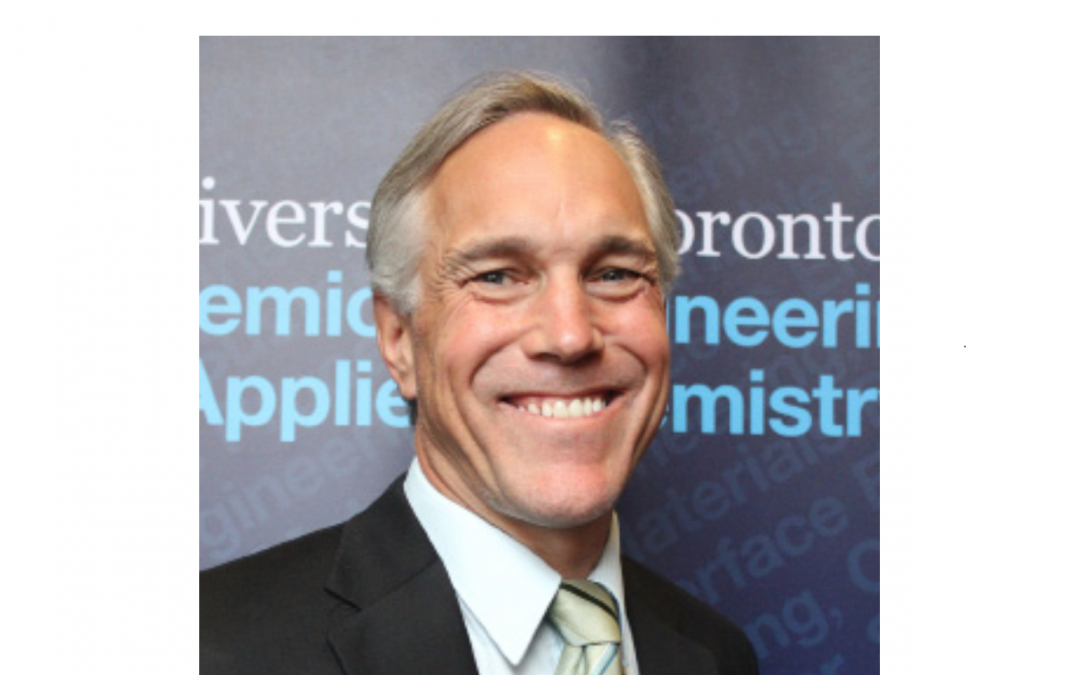
Grant Allen is a Professor in the Department of Chemical Engineering and Applied Chemistry at the University of Toronto and Frank Dottori Chair in Pulp and Paper Engineering. He obtained his B.A.Sc. (1981) and M.A.Sc.(1983) degrees Chemical Engineering at the University of Toronto, specializing in bioprocesses and biomedical engineering. Grant also worked with Esso Petroleum Canada before enrolling in a Ph.D. program in chemical engineering (specializing in biochemical engineering) at the U of Waterloo. His research is in bioprocess engineering, with application to treating wastes and utilizing them for energy and chemical production. He has over 150 publications and has supervised 34 doctoral students, 46 masters and 21 postdoctoral fellows. He has co-led ten industrial research consortia working on environmental and energy challenges in the pulp and paper industry with multidisciplinary teams of up to 15 faculty and their students that engage up to 25 partners from Canada and around the world. He spent a research leave in 1994 with Weyerhaeuser Co. in Tacoma WA, working on biofiltration of air emissions and a research leave at a crown research organization in New Zealand (SCION), working with their green processing team on biorefineries. He has held several leadership positions in academia and the community, including Vice-Dean (Undergraduate) for the Faculty (2007-2011), Department Chair from (2011-2021), Director of the Pulp & Paper Centre (2001-03, 2022-23), President of the Canadian Society of Chemical Engineering (2008/09) and Chair of the Chemical Institute of Canada (2019/2020). He is a Fellow of the Canadian Academy of Engineering, the American Association for the Advancement of Science, the Engineering Institute of Canada and the Chemical Institute of Canada and was recently awarded his Faculty’s Sustained Excellence in Teaching Award.
Grant’s research interests are in the field of bioprocess engineering with emphasis on the biological treatment of waste waters, bioflocculation, microalgae production, biofiltration of air emissions, biofilms, microbiology of waste treatment and bioreactor design. His interests apply to many industrial wastes although most of his work is in the Pulp and Paper industry. Professor Allen provides technical advice on processes involving biological materials (e.g. cells, enzymes, etc.) and waste treatment (water and air) and environmental processes. He has provided advice and conducted research contracts in his areas of expertise for various manufacturing operations, engineering firms, insurance and legal firms and the Federal Government of Canada. He has extensive experience advising on scientific research tax credit claims for the Canadian government and has also received training in alternative dispute resolution.
B.Sc. (Oklahoma), M.Sc. (Oklahoma), Ph.D. (UC Berkeley) Associate Professor, Department of Chemical Engineering and Applied Chemistry, University of Toronto
Areas of expertise
Applications of multidisciplinary research strategy (kinetic and isotopic techniques, spectroscopy, and theoretical modeling) to advance fundamental, molecular scale understanding of heterogeneous catalytic processes. Understand heterogeneous catalytic science, deciphering the structures and dynamics of catalyst surfaces and connecting these surface events at the atomic scale to their macroscopic catalytic behavior for fuel processing, chemical synthesis, and emission control technologies.
Current Projects
Industrial catalytic technology developing: understanding the effects of microenvironment in sustainable chemical and fuel synthesis
Bridging thermo- and electro-catalysis in the synthesis of sustainable liquid fuel
Connect the structure and reactivity of transition metal catalysts in c-h, c-o, c-c bond activation
Many of the challenges across the fields of environment, health, medicine, and energy can be addressed through advances in catalytic technology. The goal of my research is to advance catalytic technology by providing a deep understanding of its science at the molecular level. A second goal of this effort is to apply this new knowledge to the design of materials with novel kinetic functions that enable desirable chemical reactions to occur selectively and efficiently.
My research group synthesizes catalytic materials with purpose-built structures and compositions and applies combined methods of kinetics, spectroscopy, microkinetic modeling, and isotopic analysis to probe their dynamics and kinetic consequences in chemical reactions under conditions relevant to industrial practice. These fundamental studies are carried out in parallel with designing and fabricating “chemical-plants-on-a-chip” as compact and light-weight micro-reactor systems for small scale fuel and chemical processing.
Aside from the full range materials synthesis, kinetic evaluation, and spectroscopy capabilities in our laboratory, our group carries out in-situ X-ray absorption studies and perform theoretical calculations at the various national scientific user centers in Canada and the United States. We also collaborate extensively with experts in the complimentary disciplines of surface science and theoretical modeling.
Director of Pulp & Paper Centre, NSERC Industrial Research Chair in the Role of Inorganics in the Industrial Processing of Woody Biomass, Associate Professor, Dept. of Chemical Engineering and Applied Chemistry, University of Toronto
Particle science, surface science, water and wastewater treatment, pulp and paper.
Consulting Activity
Technical advice on water disinfection, paper finishing, papermaking, and litigation support.
About
Ramin Farnood is an Professor and chair at the Department of Chemical Engineering and Applied Chemistry and Associate Director of the Pulp & Paper Centre at the University of Toronto. He obtained his B.Sc. (1987) and M.Sc. (1990) degrees from Sharif University of Technology, Tehran, Iran, specializing in chemical engineering. He obtained his Ph.D. in 1995 also in chemical engineering from the University of Toronto.
Professor Farnood is interested in the particle and surface science, in particular related to water and wastewater quality as well as pulp and paper. He research focus involves experimental and theoretical studies in disinfection of water and wastewater, and paper coating and calendering.
Professor Farnood provides advice on the ultraviolet disinfection, water and wastewater treatment, advanced oxidation, paper coating and calendering, and papermaking. He provides specialized testing and analysis services including particle characterization, surface analysis, water and wastewater testing, paper coating, and coating analysis. Professor Farnood is also available to provide advice on SR&ED tax claims, and on patents and litigations related to his fields of expertise.
Pollution Abatement Technologies, Resource Recovery from Industrial Wastes, Environmental Behaviour of Pollutants
Consulting Activity
Technical advice on sulphur-related pollution control and pollutants behaviour and impact
About
Charles Jia is an Professor of the Department of Chemical Engineering and Applied Chemistry at the University of Toronto . He obtained his B.E. (1982) and M.E. (1984) degrees in Material Engineering at Chongqing University and a Ph.D. degree (1994) in Department of Materials Science and Engineering at McMaster University. Prior to his appointment to this department in 1996, he had been an NSERC postdoctoral fellow for two years. He is a member of Canadian Society of Chemical Engineering (CSChE), Air and Waste Management Association (A&WMA), Canadian Institute of Mining, Metallurgy and Petroleum (CIM), and Association of Environmental Engineering and Science Professors (AEESP), and a registered engineer in Ontario.
Professor Jia’s research is concerned with applying sciences and engineering principles to environmental problems in industry and creating innovative solutions for maximizing the value of natural resources and minimizing the impact of resource-based industries to ecosystems. His areas of expertise include pollution abatement technologies, secondary materials and by-product utilization and treatment technologies, environmental applications of inorganic sulphur chemistry and modeling the fate and transport of pollutants in the environment. Current projects aim at re-generable flue gas desulphurization (FGD), mercury emission control using sulphur-impregnated active carbon (SIAC), non-ferrous metals recovery from smelter slags, utilization of petroleum fluid coke and engineering sulfate reducing bacteria (SRB) for water pollution control. He has published over 20 papers in refereed journals and has two patents.
Professor Jia provides advice on pollution abatement technologies, resource recovery from industrial wastes, behaviour of pollutants in natural and controlled environment, in particular, sulphur-related pollution control and pollutants behaviour and impact.
Enzyme technology; bioreactors and bioprocesses; industrial applications of enzymes; alternative energy sources; pulp and paper, reactor design and kinetics
Consulting Activity
Bioprocess technology, reactor design and kinetics, occupational health and safety.
About
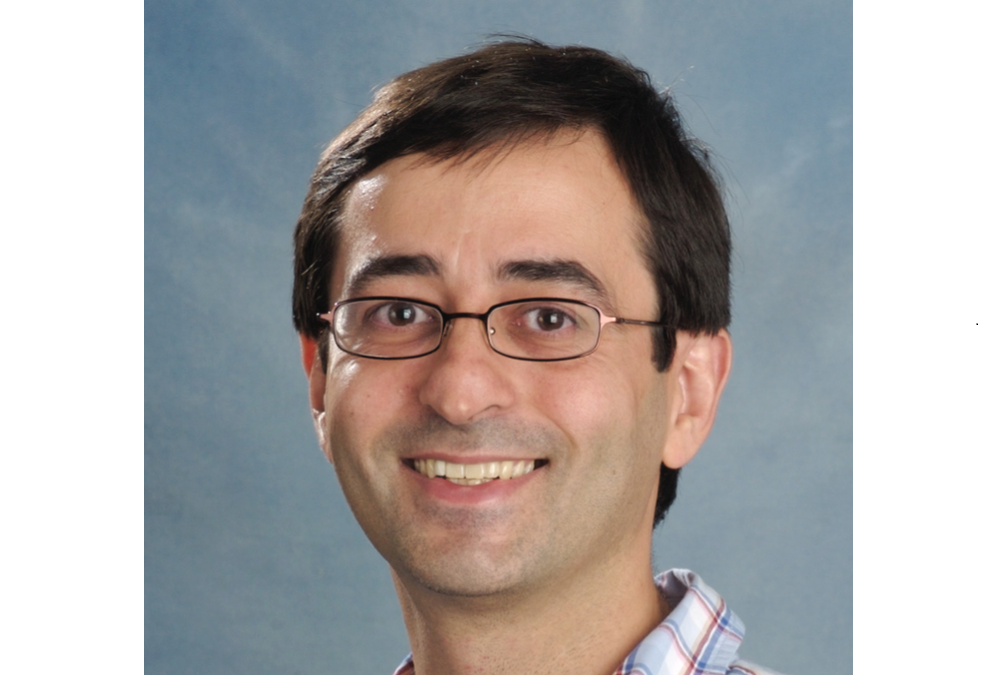
Brad Saville is a Professor in the Department of Chemical Engineering and Applied Chemistry at the University of Toronto, and is the Faculty Coordinator for Occupational Health and Safety. He obtained his B.Sc. (1985) and Ph.D. (1989) degrees in Chemical Engineering at the University of Alberta, specializing in bioreactors, drug metabolism, and bioprocessing.
Professor Saville is interested in bioprocess technology, with particular emphasis on the performance, characteristics and applications of enzymes to biofuels, in starch processing, and in pulp and paper. He holds several patents related to enzyme technology and the industrial application of biocatalysts. In addition, he has published several articles related to the kinetics and mechanistic aspects of enzyme function, including pharmacokinetics, and is the co-author of “An Introduction of Chemical Reaction Engineering and Kinetics”, published by John Wiley and Sons in 1999.
Professor Saville provides advice on issues related to occupational health and safety, bio/enzymatic processing, general chemical engineering process technology, and technical/process analysis in support of insurance claims and litigation.